
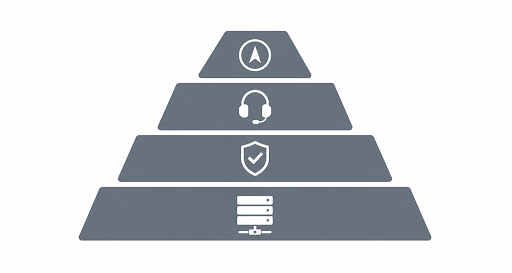
Nine times out of ten, when a Charlotte business calls about an IT problem, the actual problem is not the one they called about. A slow network gets blamed for a server that was never properly maintained. A cybersecurity scare leads to a new tool purchase when the real gap was basic access control. Businesses keep throwing solutions at symptoms while the underlying issue sits untouched, and 2026 is shaping up to be the year this pattern finally catches up with a lot of companies.
Business IT support in Charlotte, NC has never had more options attached to it, from AI powered automation to advanced threat detection platforms. The problem is that most companies are reaching for the newest layer of technology before the foundation underneath it can actually support the weight. Here is what a business actually needs, in the right order, and why skipping ahead almost always backfires.
Layer one: a foundation that simply does not break
Before any business should spend a dollar on advanced tools, it needs infrastructure that is reliable enough to disappear into the background. This means properly maintained servers or cloud environments, updated hardware, a network that does not slow to a crawl during busy hours, and backups that have actually been tested rather than assumed to work.
This sounds basic, and that is exactly the point. A large share of the IT frustration business owners feel comes from skipping this layer entirely. Managed IT services exist specifically to keep this foundation solid through ongoing monitoring and maintenance, catching small issues like an aging switch or a failing hard drive before they turn into an afternoon of lost productivity. Businesses that build on a shaky foundation end up paying for advanced solutions that fail for entirely unrelated, unglamorous reasons.
Layer two: security that matches the actual threat, not last year’s threat
Once the foundation is solid, security becomes the next non negotiable layer, and this is where CompTIA’s own research backs up what Charlotte businesses are already feeling on the ground. CompTIA’s IT Industry Outlook 2026 report identifies cybersecurity as what the organization’s own researchers call the overarching consideration behind every other operational improvement businesses are planning this year. You can read the full report here: CompTIA IT Industry Outlook 2026. Cyber threats have moved well past basic viruses, now involving AI assisted phishing, credential theft, and attacks specifically designed to bypass tools that only watch for the threats of a few years ago.
This is where a proper Cybersecurity Protection Services setup earns its place, layering firewall management, threat detection, and employee training on top of the stable foundation from layer one. Security bolted onto an unreliable network tends to produce false confidence rather than real protection, which is exactly the trap many businesses fall into.
Layer three: support that responds before frustration sets in
Even with a solid foundation and real security in place, businesses still need people who can actually help when something unexpected happens. This is the layer most companies underestimate until they are stuck waiting on hold with a support line that clearly was not built for urgency. Fast, local help desk and on site support matters more than most business owners realize until the day their team is sitting idle waiting for a fix.
Charlotte businesses in hands on industries feel this acutely. A construction company managing job site connectivity and field devices cannot afford a support ticket sitting untouched for six hours, and this layer is where that kind of operational reality gets accounted for properly.
Layer four: a strategy that looks further than the next fire
The top layer, and the one most businesses never actually reach, is strategic planning. This means having a technology roadmap tied to where the business is actually headed over the next one to three years, not just a list of tools purchased reactively whenever something breaks. IT consulting and strategy support helps businesses budget intentionally, plan hardware refresh cycles before they become emergencies, and evaluate new technology, including AI tools, with a clear eye rather than pressure driven urgency.
This is also exactly where most companies get the order backwards. They chase AI adoption or the newest security product before layers one through three are solid, which is precisely the mistake CompTIA’s own data points to when it notes that a majority of businesses remain in the early, uncertain stages of AI adoption despite the enthusiasm surrounding it.
Why solving problems out of order costs more in the long run
A business that buys advanced cybersecurity tools while running on an unreliable network is paying for protection that a shaky foundation will keep undermining. A business that jumps straight to AI experimentation without a support system in place is building on sand. The businesses that get real value out of their technology budget in 2026 are the ones building layer by layer, in the right order, rather than chasing whatever feels most urgent this week.
Most businesses do not need more technology in 2026. They need the right technology, built in the right order, by a team that understands which layer actually needs attention first. gTECHserv has been doing exactly that for Charlotte businesses since 2000. Schedule a free consultation and find out which layer of your IT setup actually needs the work.
Frequently asked questions
What should a Charlotte business prioritize first when improving its IT setup?
Reliability and basic infrastructure stability should come first. Advanced security tools and strategic technology investments only deliver their full value once the underlying network and systems are dependable.
Is cybersecurity really more urgent than adopting new technology like AI?
For most businesses, yes. Industry research shows cybersecurity is considered the top overarching priority behind other 2026 technology investments, since a security gap can undo the value of every other improvement.
How do I know if my business is solving the wrong IT problem?
A common sign is recurring issues that get patched repeatedly without ever fully going away. This usually points to an underlying foundation or infrastructure problem being masked by surface level fixes.
Does gTECHserv support businesses outside of Charlotte, like Concord or Gastonia?
Yes, gTECHserv supports businesses throughout the greater Charlotte metro area, including surrounding communities, with the same layered approach to infrastructure, security, support, and strategy.