
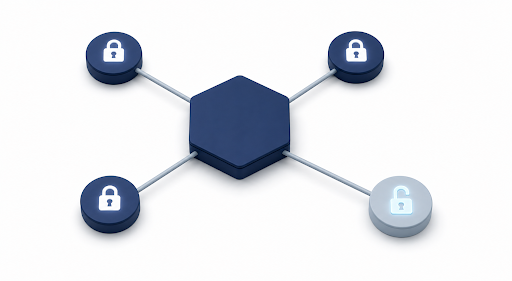
A business can lock down its own network perfectly and still get breached through the back door of a vendor it trusted completely. This is not a hypothetical risk anymore. It is the dominant pattern behind a growing share of breaches, and most cybersecurity protection services plans are built almost entirely around defending a company’s own perimeter while quietly ignoring every third party with a connection into it.
Category one: software vendors with direct system access
Remote monitoring tools, accounting software integrations, and industry-specific platforms often require deep access into a business’s systems to function. Each one of these represents a door into your network that your own security controls do not directly govern, since the vendor’s own security posture now determines part of your risk exposure whether you audited it or not.
Category two: payment processors and financial vendors
Financial vendors handle some of the most sensitive data a business touches, yet they rarely get the same scrutiny as an internal system upgrade would. A breach at a payment processor can expose customer financial data through no fault of the business itself, while still landing squarely as the business’s problem to explain to affected customers.
Category three: subcontractors and suppliers with network access
This risk hits particularly hard in industries built around subcontractor relationships. Manufacturing businesses working with suppliers who have direct access to shared systems or shared data face exactly the kind of exposure that has driven the sharpest recent shift in breach patterns industry wide. Verizon’s 2026 Data Breach Investigations Report found that third-party supply chain breaches jumped 60 percent year over year, now accounting for 48 percent of all breaches analyzed, nearly half. You can review the full findings here: 2026 Data Breach Investigations Report Findings, Verizon. A proper Cybersecurity Protection Services plan in Charlotte NC has to account for exactly this shift, not just the traditional perimeter threats the industry spent the last decade building defenses around.
Category four: shadow SaaS tools nobody approved
Employees connecting unapproved SaaS tools to company email or file storage accounts creates access points that never went through any vendor review process at all, because leadership never knew the tool existed in the first place. This pattern connects directly to the risk we described in is your employee the biggest cybersecurity threat, where good intentions and a desire to work more efficiently quietly introduce exactly the kind of unmonitored access this category represents.
What a real vendor risk management process actually includes
Closing this gap does not require auditing every vendor with the same intensity. It requires categorizing vendors by the level of access and data sensitivity involved, then applying proportionate scrutiny, deeper review for vendors with broad system access, lighter review for vendors with minimal exposure. Proper managed IT services increasingly build this vendor risk categorization directly into ongoing security management, rather than treating it as a one-time checkbox during initial vendor selection and never revisiting it again.
Why healthcare and compliance-heavy businesses feel this most
This gap becomes especially consequential for businesses handling regulated data. Healthcare practices working with billing vendors, scheduling platforms, and specialty software all carry compliance exposure tied directly to how well those vendors protect the data flowing through them, a risk our earlier breakdown of what a real data breach actually costs covered in detail, since the financial and reputational fallout rarely stays contained to just the vendor that got breached.
What this means for how a business evaluates its own security
The businesses closing this gap effectively are the ones treating vendor risk as a genuine extension of their own security posture, not a separate conversation handled by procurement once and forgotten. This is the same layered thinking behind how managed IT services help smaller businesses compete against much larger corporate competitors, where closing gaps larger competitors have already addressed is exactly what levels the playing field.
A perfectly secured network with an unvetted vendor connected to it is not actually secure. gTECHserv builds cybersecurity protection services in Charlotte NC that account for exactly this gap. Schedule a consultation today and find out which of your vendors actually has access to what.
Frequently asked questions
How many vendors does a typical small business need to actually worry about?
It varies significantly, but any vendor with direct access to systems, sensitive data, or network connectivity deserves a basic risk review, regardless of how small or informal the relationship feels.
Is vendor risk management realistic for a small or mid-sized business without a dedicated compliance team?
Yes, a proportionate approach built into ongoing managed IT and cybersecurity services makes this manageable without requiring a large internal team, focusing deeper scrutiny only on vendors with meaningful access or data exposure.
What is the fastest way to identify unapproved shadow SaaS tools already connected to company systems?
A review of connected app permissions across email and file storage platforms typically surfaces most unauthorized connections, often revealing tools leadership had no idea were in use.
Does gTECHserv’s cybersecurity protection services include vendor and third-party risk review for Charlotte businesses?
Yes, gTECHserv builds vendor risk categorization directly into its cybersecurity protection services for Charlotte businesses, extending protection beyond just the internal network to the vendors connected into it.