
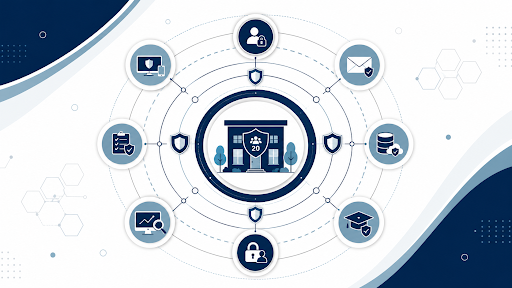
Enterprise-Level Cybersecurity Does Not Mean Enterprise-Level Complexity
A 20-person business does not need a cybersecurity program that feels like it was built for a Fortune 500 company. It does, however, need more than basic antivirus, a firewall, and a hopeful belief that small businesses are too small to be targeted. For companies searching for cybersecurity services Charlotte NC, the real question in 2026 is not whether a smaller business needs strong cybersecurity. The real question is how to build protection that is serious enough for modern threats without overwhelming the team.
That balance matters. Many small businesses hear the phrase “enterprise-level cybersecurity” and immediately assume it means complicated systems, expensive tools, endless reports, and policies nobody has time to follow. But mature cybersecurity is not about making the business more complicated. It is about making the business harder to disrupt, easier to monitor, and better prepared to recover. For a 20-person company in Charlotte, enterprise-level cybersecurity should look practical, layered, and manageable. It should protect employees, devices, accounts, email, files, backups, and daily operations in a way that fits the size of the business.
The 20-Person Business Has Bigger Risk Than It Thinks
A small team can still carry serious risk. Twenty people may manage customer records, invoices, payroll information, legal documents, project files, vendor payments, cloud platforms, email accounts, remote access, and business applications. That is a lot of valuable information moving through a relatively small environment.
The problem is that many smaller businesses operate with enterprise-level dependency but small-business security habits. They rely heavily on digital systems, but access controls may be loose. Employees use cloud tools every day, but permissions may not be reviewed often. Email is essential, but phishing protection may be limited. Backups may exist, but recovery may not be tested. Devices may connect from multiple locations, but endpoint security may be inconsistent. This is where cybersecurity maturity matters. A smaller company does not need to copy every enterprise process, but it does need to adopt the principles that make larger organizations more resilient: visibility, control, layered protection, accountability, and recovery planning.
Layer 1: Know What You Actually Need to Protect
The first layer of enterprise-level cybersecurity is not a tool. It is clarity. A business needs to know what systems, data, accounts, and devices matter most. That includes employee laptops, email accounts, customer databases, accounting systems, cloud file storage, shared drives, business applications, phones, vendor portals, and backup systems. Without a clear inventory, cybersecurity becomes guesswork. You cannot protect what you have not identified. For a 20-person business, this does not have to be complicated. It can begin with a practical technology assessment. What devices are active? Who uses them? What applications are critical? Which accounts have administrator access? Where is sensitive data stored? Which systems would stop the business if they went down?
Once those answers are clear, security becomes more targeted. The business can focus on protecting what actually matters instead of buying random tools and hoping they cover the right risks.
Layer 2: Protect Every Account Like It Matters
In a smaller business, every account matters because one compromised login can create a large impact. Email accounts, cloud accounts, admin accounts, accounting software, file-sharing tools, and remote access systems should not be protected by passwords alone. Enterprise-level cybersecurity for a 20-person business should include multi-factor authentication, strong password practices, role-based access, and regular user reviews. Employees should only have access to what they need. Former employees should be removed quickly. Administrative privileges should be limited and monitored. This is one of the most important areas where small businesses can improve security without adding unnecessary complexity. Better account protection can reduce the damage caused by phishing, password reuse, and unauthorized access.
Layer 3: Secure the Devices People Use Every Day
Cybersecurity becomes real at the device level. Employees work from laptops, desktops, mobile devices, and sometimes remote locations. If those devices are unprotected, outdated, or unmanaged, they can become entry points into the business. Endpoint protection helps reduce that risk. It gives the business better control over devices, threat detection, updates, and suspicious behavior. This matters because employees do not need to understand every technical threat for the business to be better protected. The right security systems should help protect them in the background. gTECHserv provides endpoint security as part of its cybersecurity protection services for Charlotte businesses, helping companies protect the devices their teams rely on every day.
Layer 4: Make Email Harder to Exploit
Email remains one of the easiest ways for threats to reach employees. A 20-person company may receive vendor invoices, customer messages, internal requests, file attachments, payment updates, password reset emails, and scheduling links every day. That normal activity creates opportunity for attackers. Enterprise-level cybersecurity does not expect employees to catch every fake message perfectly. It adds protection around them. Email filtering, phishing protection, domain security settings, employee awareness, and clear reporting processes all help reduce risk. This also protects business reputation. If an employee account is compromised, attackers may use it to contact customers, coworkers, or vendors. That can damage trust quickly. Strong email security is not optional for a business that depends on communication.
Layer 5: Use Security Controls That Are Practical and Prioritized
A 20-person business does not need to implement every cybersecurity framework in full detail, but it does need a prioritized approach. The Center for Internet Security describes the CIS Critical Security Controls as a prescriptive and simplified set of best practices that help organizations strengthen their cybersecurity posture. The controls focus on practical safeguards that reduce common risks, including areas like cyber hygiene, configuration management, and protection against common attacks. CIS Critical Security Controls. This is a useful mindset for smaller businesses because cybersecurity can feel overwhelming when everything sounds urgent. A prioritized approach helps the company focus on the controls that matter first. That may include account protection, device management, vulnerability patching, backup protection, email security, access control, and incident response planning. Enterprise-level cybersecurity is not about doing everything at once. It is about doing the right things in the right order and improving over time.
Layer 6: Build Backups Into the Security Program
Backups are not just an IT task. They are part of cybersecurity. If ransomware, data corruption, accidental deletion, or system failure affects the business, recovery depends on whether backups are complete, secure, and tested. A 20-person company should know what is being backed up, how often backups run, where they are stored, and how quickly critical data can be restored. Backup systems should not be exposed to the same risks as the primary environment. They should be protected and reviewed regularly. This is where enterprise-level thinking becomes practical. The business does not need a huge disaster recovery department. It needs a tested backup plan that leadership understands and employees can rely on when something goes wrong.
Layer 7: Train Employees Without Turning Security Into Fear
Employees are part of the security program, but they should not be treated as the weakest link in a way that creates blame. They need practical training, clear examples, and simple reporting steps. Good training helps employees recognize suspicious emails, payment change requests, unusual login prompts, unexpected attachments, and unsafe file-sharing behavior. But training should be paired with technical protection. People need support from systems, not pressure to be perfect. For a 20-person company, security awareness can be built into normal operations. Short refreshers, simple reminders, and easy reporting can create better habits without slowing the business down.
Layer 8: Have a Response Plan Before Something Happens
Enterprise-level cybersecurity includes response planning. If something suspicious happens, your team should know what to do. Who gets contacted? Which systems should be isolated? How are employees informed? Who communicates with customers if needed? Where is the recovery plan stored? What should be documented? A response plan reduces confusion. It gives leadership more control during a stressful event. It also helps employees avoid making the situation worse by continuing to use affected accounts or devices. For a small business, the response plan does not have to be complicated. It needs to be clear, practical, and accessible. The worst time to create a response plan is after an incident begins.
Layer 9: Make Cybersecurity Part of Regular IT Management
Cybersecurity cannot sit separate from daily IT. Devices, users, email, cloud access, backups, updates, and support tickets are all connected. A security issue may begin as a help desk request. A device problem may reveal an endpoint risk. A recurring login issue may point to access control problems. That is why managed IT and cybersecurity should work together. gTECHserv helps Charlotte businesses strengthen cybersecurity through threat detection, endpoint security, email and phishing protection, security risk assessments, and practical support that connects protection with daily business operations. For a 20-person business, this connected approach is often the most realistic path. You get stronger protection without needing to build a large internal security department.
Build Enterprise-Level Protection Without Enterprise-Level Burden
A 20-person business does not need unnecessary complexity. It needs cybersecurity that fits how the company works: clear, layered, practical, and managed consistently. Enterprise-level cybersecurity in 2026 means knowing what you need to protect, securing accounts, managing devices, protecting email, testing backups, training employees, and having a response plan. It means reducing risk without turning security into a full-time distraction for leadership. gTECHserv helps Charlotte businesses build cybersecurity protection that is practical, scalable, and aligned with real business needs. If your company has outgrown basic security but does not need enterprise complexity, gTECHserv can help create the right level of protection for your team. Contact gTECHserv today to build a stronger cybersecurity foundation for your 20-person business in Charlotte.
FAQs
What does enterprise-level cybersecurity mean for a small business?
Enterprise-level cybersecurity for a small business means using layered protection, strong account security, endpoint protection, email security, backup planning, employee awareness, and response readiness without unnecessary complexity.
Does a 20-person business really need cybersecurity services?
Yes. A 20-person business can still handle sensitive data, customer records, payments, cloud access, and important business systems. Strong cybersecurity helps reduce risk and protect daily operations.
What cybersecurity services should small businesses in Charlotte prioritize?
Small businesses in Charlotte should prioritize multi-factor authentication, endpoint protection, email and phishing protection, access control, backup testing, security awareness training, monitoring, and incident response planning.
Does gTECHserv provide cybersecurity services in Charlotte NC?
Yes. gTECHserv provides cybersecurity protection services in Charlotte, NC, including threat detection, endpoint security, email and phishing protection, risk assessments, and practical security support for growing businesses.